
What is Salatul Tasbeeh? Complete Guide for Muslims
Salatul Tasbeeh is a special voluntary (nafl) prayer in Islam known for its immense spiritual rewards. It includes the recitation of a unique Tasbeeh multiple times throughout four rak’ahs. This prayer is widely associated with seeking forgiveness and gaining closeness to Allah. Many Islamic scholars emphasize its importance due to its powerful benefits. In this complete guide, you will learn its meaning, method, and significance in a simple way.
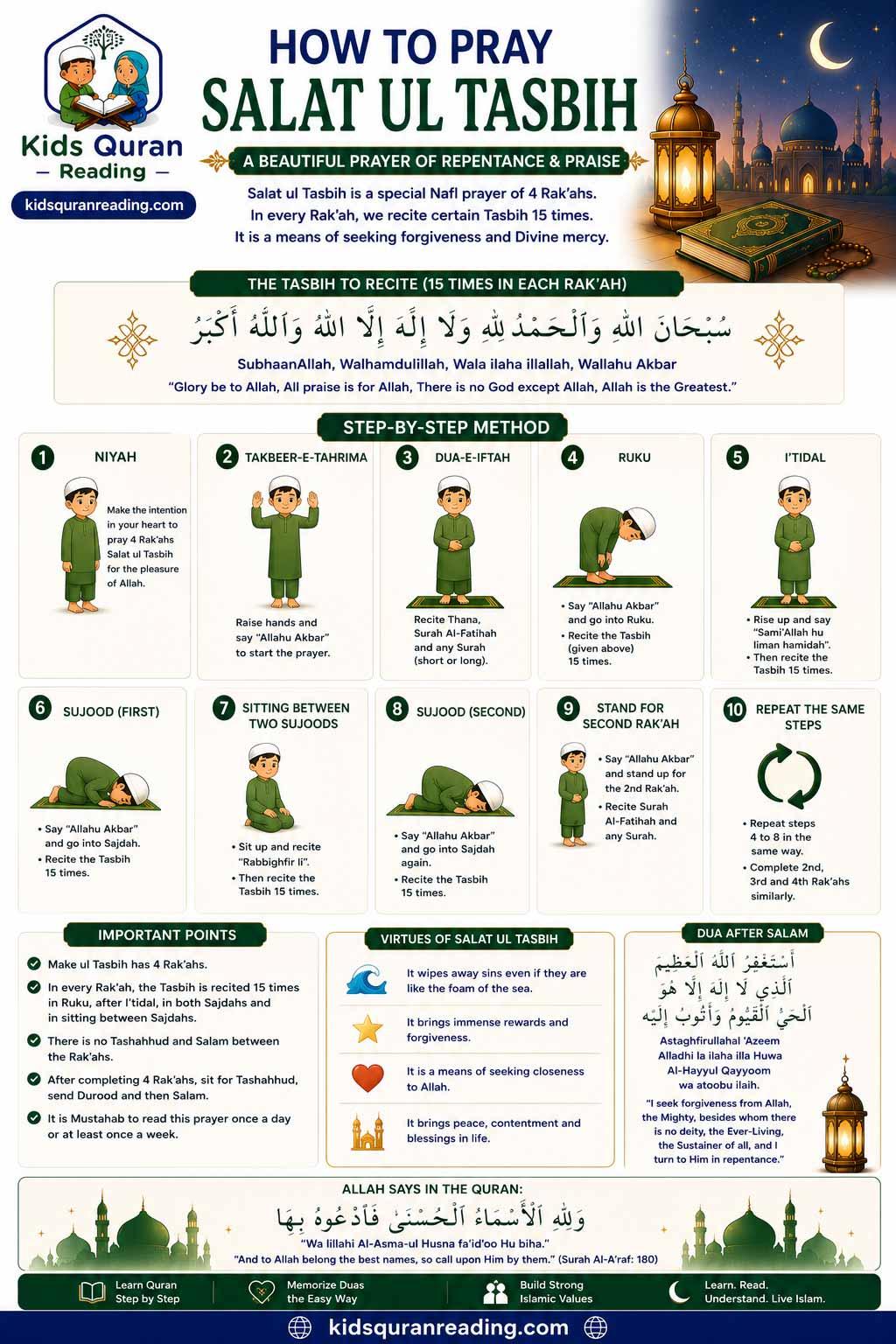
How to Pray Salatul Tasbeeh Step-by-Step
Performing Salatul Tasbeeh may seem detailed, but it becomes easy once you understand the steps. The prayer consists of four rak’ahs, with a total of 300 Tasbeeh recitations. The Tasbeeh is recited in different positions such as standing, bowing, and سجود (prostration). Each step has a fixed count, making it structured and unique. Following a step-by-step approach ensures you perform it correctly and with focus.
Salatul Tasbeeh Prayer: Method, Benefits & Importance
Salatul Tasbeeh combines a unique method with deep spiritual benefits. It is especially valued for seeking forgiveness of sins—both minor and major. This prayer also strengthens your connection with Allah through repeated remembrance. Many believers experience inner peace and spiritual clarity after performing it. Understanding its method and importance helps you gain the full reward of this beautiful prayer.
The Powerful Prayer of Forgiveness: Salatul Tasbeeh Explained
Salatul Tasbeeh is often referred to as a powerful prayer for forgiveness. It encourages believers to engage in constant glorification of Allah. The repetition of Tasbeeh increases mindfulness and humility during prayer. This act of worship is believed to cleanse past sins when performed sincerely. It serves as a reminder of Allah’s mercy and the importance of repentance in Islam.
Salatul Tasbeeh: A Special Prayer for Seeking Allah’s Mercy
This prayer is a meaningful way to seek Allah’s mercy and blessings. It allows Muslims to reconnect with their faith and reflect deeply. The repeated remembrance of Allah brings calmness and spiritual satisfaction. It is recommended for those looking for forgiveness and inner peace. Regularly performing Salatul Tasbeeh can lead to long-term spiritual growth and tranquility.
 |
 |
FAQs
Q1: What is Salatul Tasbeeh?
Salatul Tasbeeh is a voluntary prayer in Islam that involves reciting a special Tasbeeh multiple times to seek forgiveness and blessings.
Q2: How many rak’ahs are in Salatul Tasbeeh?
It consists of four rak’ahs, which can be prayed in one set or two sets of two rakahs.
Q3: What is the Tasbeeh recited in this prayer?
The Tasbeeh is: SubhanAllahi walhamdulillahi wala ilaha illallahu wallahu akbar.
Q4: How many times is the Tasbeeh recited?
It is recited 300 times in total during the four rak’ahs.
Q5: When is the best time to pray Salatul Tasbeeh?
It can be prayed at any time except during prohibited times (like sunrise, sunset, and midday).
Q6: Is Salatul Tasbeeh obligatory?
No, it is a voluntary (nafl) prayer, not compulsory.
Q7: What are the benefits of Salatul Tasbeeh?
It is believed to help in the forgiveness of sins, spiritual purification, and gaining closeness to Allah.
Q8: How often should one perform Salatul Tasbeeh?
It is recommended to pray it daily if possible, otherwise weekly, monthly, or even once in a lifetime.
Q9: Can beginners perform Salatul Tasbeeh?
Yes, anyone can perform it by learning the method step-by-step.
Q10: Is there any specific Surah required?
No specific Surah is required; you can recite any Surah after Surah Al-Fatihah.