The 5 Pillars of Islam Explained
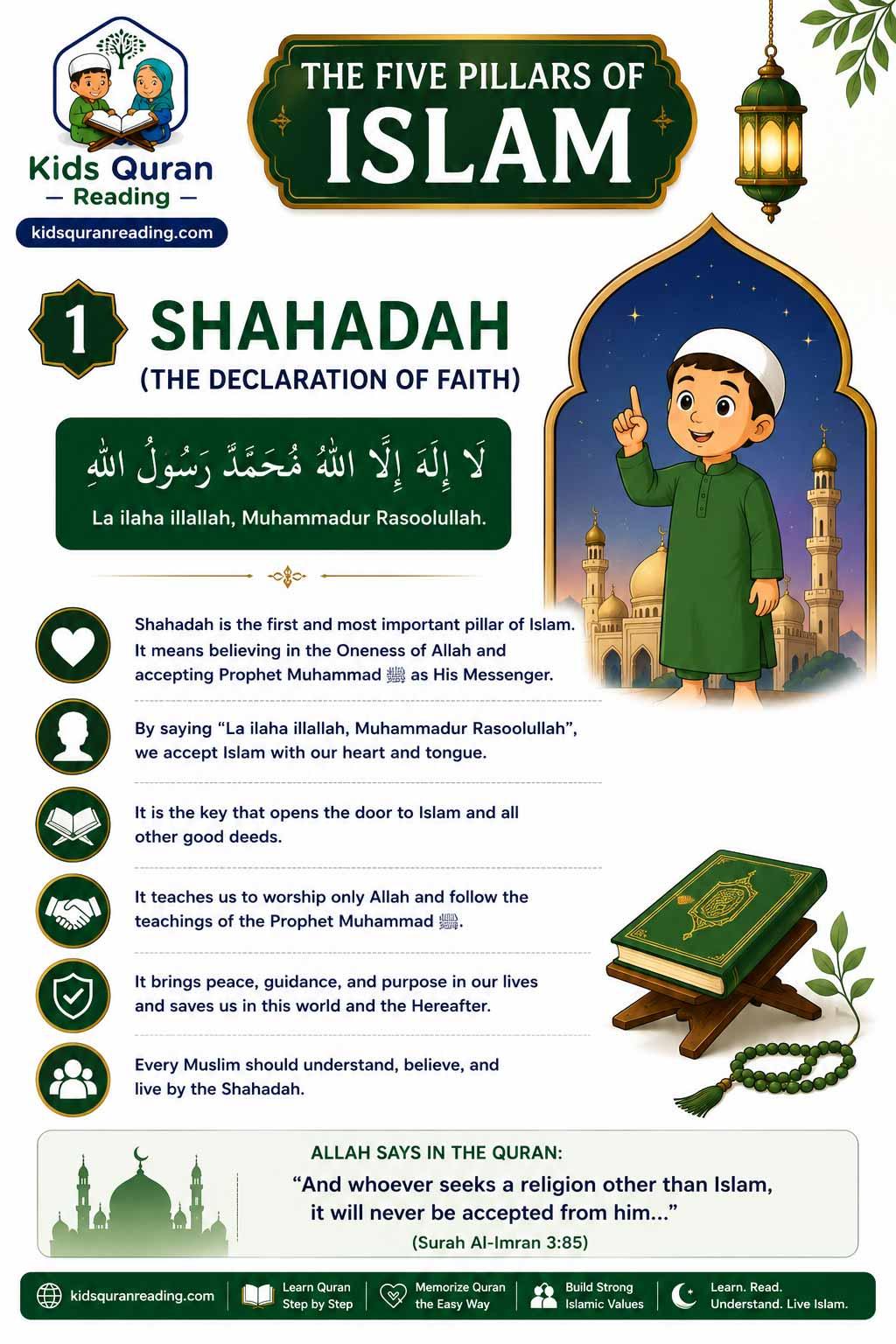
1. Shahada (Faith) – Declaration of Belief
The Shahada is the foundation of Islam: "There is no god but Allah, and Muhammad (SAW) is His Messenger."
It is the first step to becoming a Muslim and the core belief of Islam.
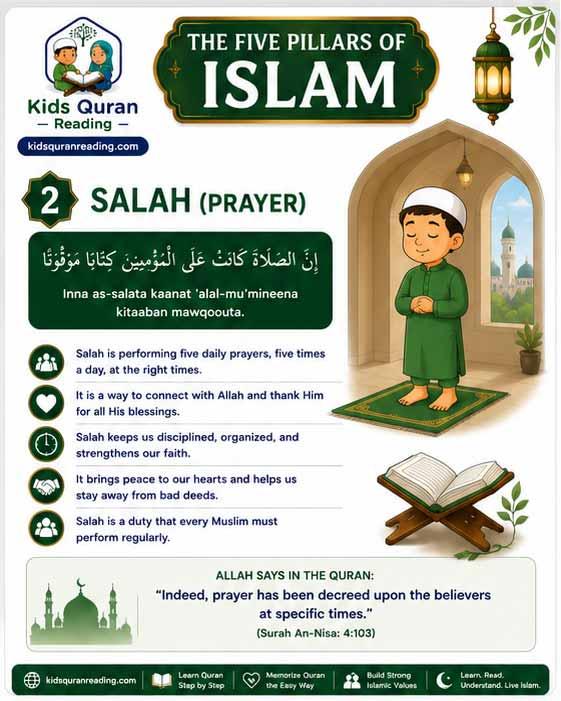
2. Salah (Prayer) – Daily Connection with Allah
Muslims pray five times a day to maintain a direct connection with Allah. Salah brings peace, discipline, and spiritual strength. It is your daily meeting with your Creator.
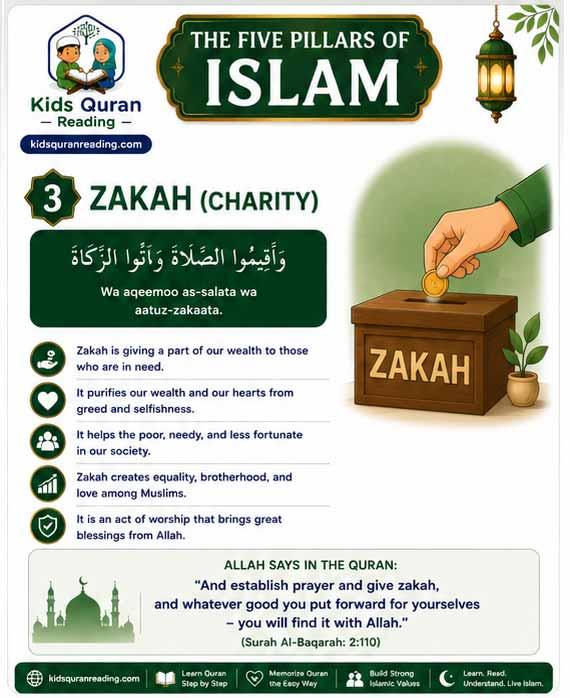
3. Zakat (Charity) – Purifying Wealth
Zakat is an obligation to give a portion of wealth to those in need. It promotes equality, compassion, and social justice. It purifies both wealth and heart.
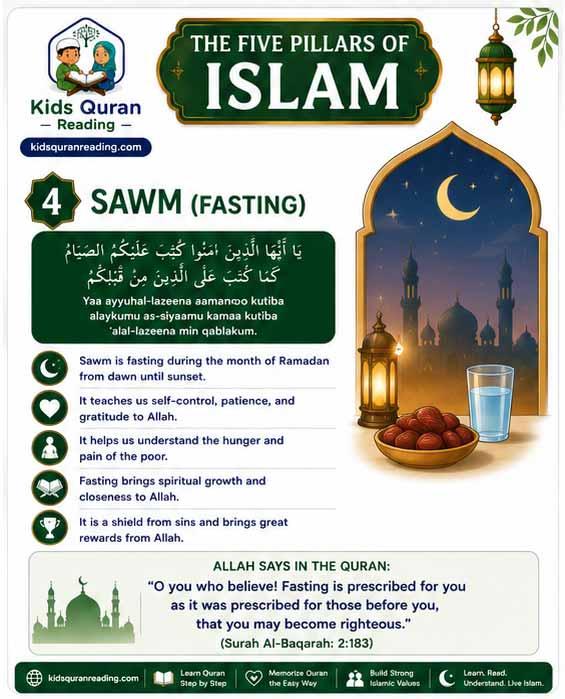
4. Sawm (Fasting) – Self-Control in Ramadan
During Ramadan, Muslims fast from dawn to sunset. This teaches patience, self-control, and empathy for the less fortunate. Fasting strengthens both body and soul.
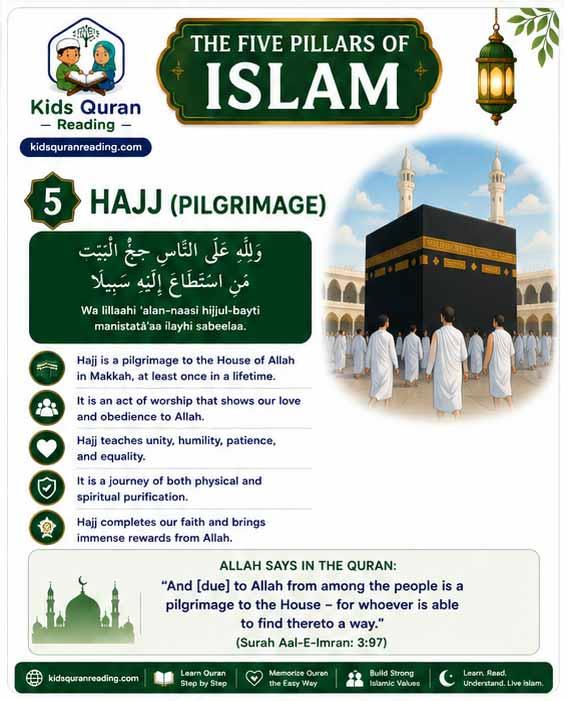
5. Hajj (Pilgrimage) – Journey of a Lifetime
Hajj is the pilgrimage to Makkah that every Muslim must perform once in a lifetime if able. It symbolizes unity and submission to Allah. A powerful journey of faith and equality.
Quran & Hadith References About the Pillars of Islam
Allah says:
"And establish prayer and give zakah and bow with those who bow [in worship and obedience]."
(Surah Al-Baqarah 2:43)
Hadith Reference
The Prophet Muhammad (SAW) said:
"Islam is built upon five: the testimony that there is no god but Allah and that Muhammad is the Messenger of Allah, establishing prayer, giving zakah, performing Hajj, and fasting in Ramadan."
(Sahih Bukhari & Sahih Muslim)
Benefits of Following the 5 Pillars of Islam
* Strengthens faith (Iman)
* Builds discipline and consistency
* Promotes kindness and generosity
* Creates a strong connection with Allah
How the Pillars Shape a Muslim’s Daily Life
From daily prayers to annual fasting and lifelong pilgrimage, the pillars guide a Muslim’s actions, mindset, and purpose.
Tips to Practice the Pillars Consistently
* Start with small, consistent steps
* Learn meanings behind each pillar
* Stay connected to Islamic knowledge
* Surround yourself with practicing Muslims
 |
 |
 |
 |
 |
FAQ's
Q1: What are the 5 pillars of Islam?
The five pillars are Shahada, Salah, Zakat, Sawm, and Hajj.
Q2: Why are the pillars of Islam important?
They form the foundation of a Muslim’s faith and guide daily life.
Q3: Are all Muslims required to follow the 5 pillars?
Yes, all Muslims are expected to follow them according to their ability.
Q4: Which pillar is the most important?
All pillars are important, but Shahada is the foundation of faith.
Q5: What is the purpose of Zakat?
To help the needy and purify wealth.
Q6: Why do Muslims fast in Ramadan?
To develop self-discipline, empathy, and closeness to Allah.
Q7: Can someone be Muslim without following all pillars?
The pillars are essential obligations, but practice may vary based on individual circumstances.