What is Dua for Funeral (Janazah)?
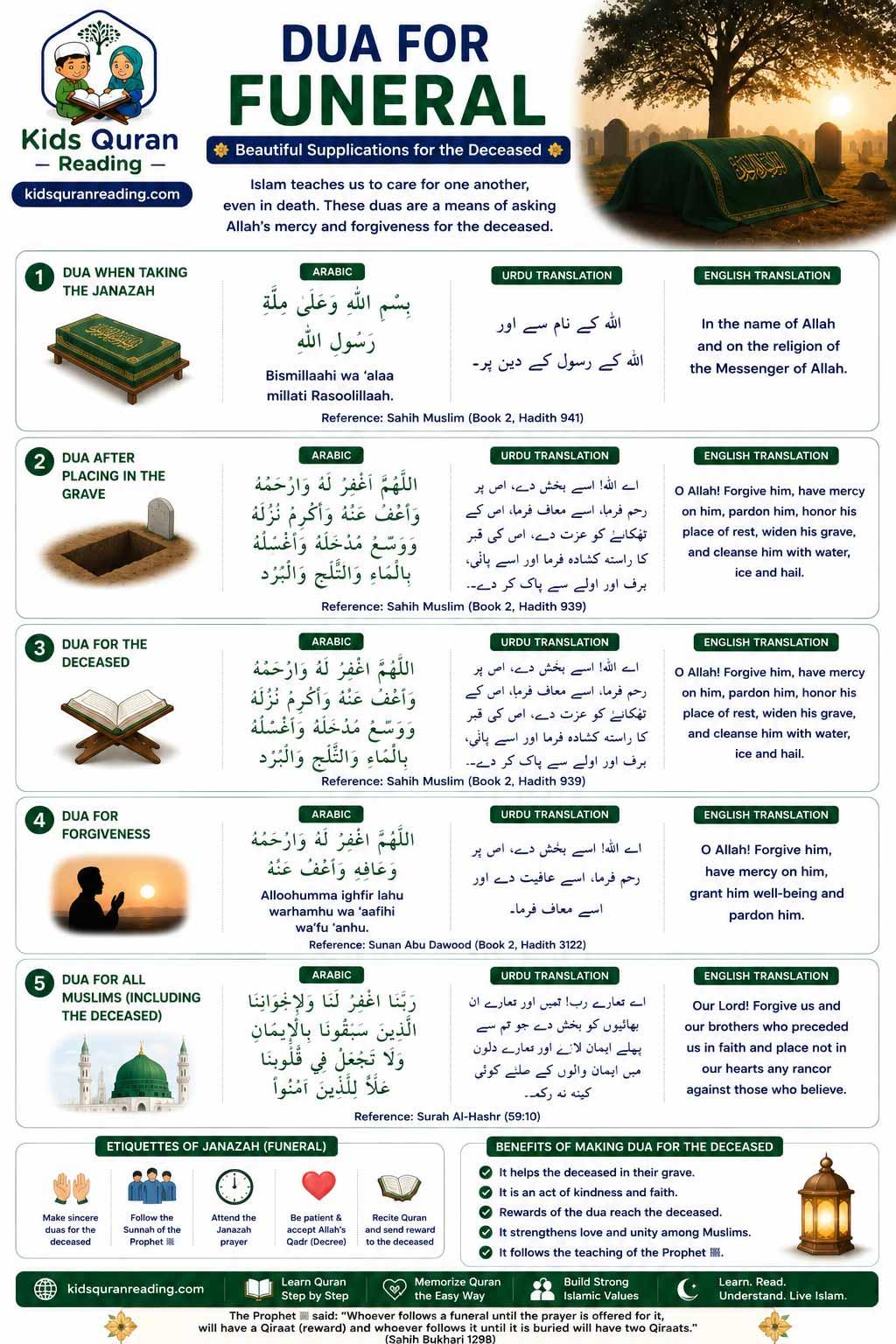
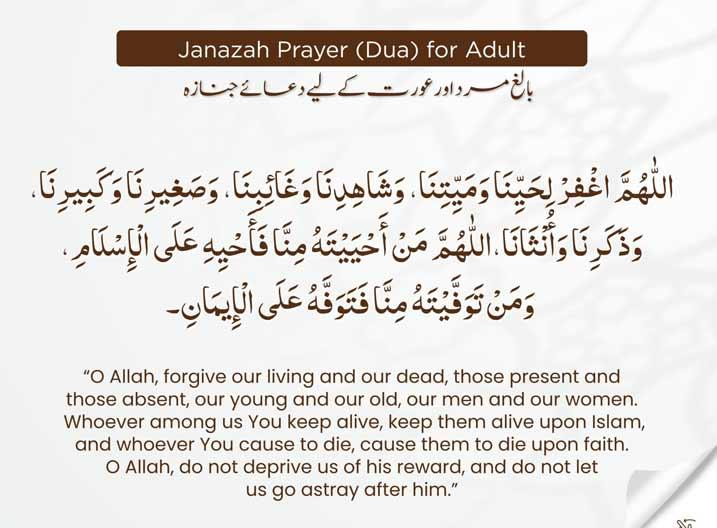
Dua for funeral, also known as Janazah dua, is a special supplication offered for the deceased Muslim. It is recited during the Janazah prayer, asking Allah to forgive the departed soul. This dua reflects compassion, mercy, and remembrance of the Hereafter. It is an essential part of Islamic funeral rites.
Importance of Janazah Dua in Islam
Janazah dua holds great significance as it is a collective prayer for forgiveness and mercy. It reminds believers of life after death and accountability. Offering this dua is considered a communal obligation (Fard Kifayah). It strengthens unity and empathy within the Muslim community.
When is Funeral Dua Recited?
The funeral dua is recited during Salat al-Janazah (funeral prayer). It is specifically read after the third Takbeer in the prayer. Muslims gather to offer this prayer before burial. It is a moment of reflection and supplication for the deceased.
Janazah Dua in Arabic
A commonly recited funeral dua is: “Allahummaghfir lahu warhamhu wa ‘afihi wa’fu ‘anhu” This dua asks Allah to forgive, have mercy, and pardon the deceased. It is simple yet powerful. Many longer duas are also recited depending on tradition.
English Translation of Funeral Dua
The meaning of the above dua is:
“O Allah, forgive him, have mercy on him, grant him ease, and pardon him.”
Understanding the translation helps deepen emotional connection. It allows the prayer to be more heartfelt and sincere.
Benefits of Reciting Dua for the Deceased
Reciting funeral dua benefits both the deceased and the one making dua. It can ease the soul’s journey in the Hereafter. It also reminds the living to prepare for their own end. Allah rewards those who pray for others sincerely.
 |
 |
How to Perform Janazah Prayer and Dua
Janazah prayer consists of four Takbeers without ruku or sujood. After the first Takbeer, Surah Al-Fatihah is recited. After the second, Durood Ibrahim is read. The funeral dua is recited after the third Takbeer, followed by a final supplication.
Short Dua for Funeral You Can Recite
Short duas like “Allahummaghfir lahu” are easy to remember and recite. Even brief supplications carry great reward. You can also make personal duas in your own words. Sincerity matters more than length.
Dua for Funeral of a Child or Woman
Specific wording may change depending on the deceased. For a woman, wording changes to “laha” instead of “lahu.” For a child, additional duas asking for intercession are recommended. These variations ensure accuracy and respect.
Etiquettes of Making Dua at Funeral
Maintain sincerity and humility while making dua. Stand respectfully and focus on the prayer. Avoid distractions and unnecessary talk. Make dua quietly and with full concentration on the deceased’s forgiveness.