What is Dua for Toilet?
Dua for toilet refers to the supplications Muslims recite before entering and after leaving the bathroom. These duas are part of daily Islamic etiquette and Sunnah practices. They help seek protection from impurities and unseen harm. Reciting them keeps a believer mindful of Allah in all situations.
Importance of Bathroom Dua in Islam
Islam teaches cleanliness and spiritual awareness in every aspect of life. The bathroom is considered a place where one should seek Allah’s protection. Reciting dua before entering protects from harmful influences. It also shows obedience to the Sunnah of Prophet Muhammad (PBUH).
Dua Before Entering the Toilet in Arabic
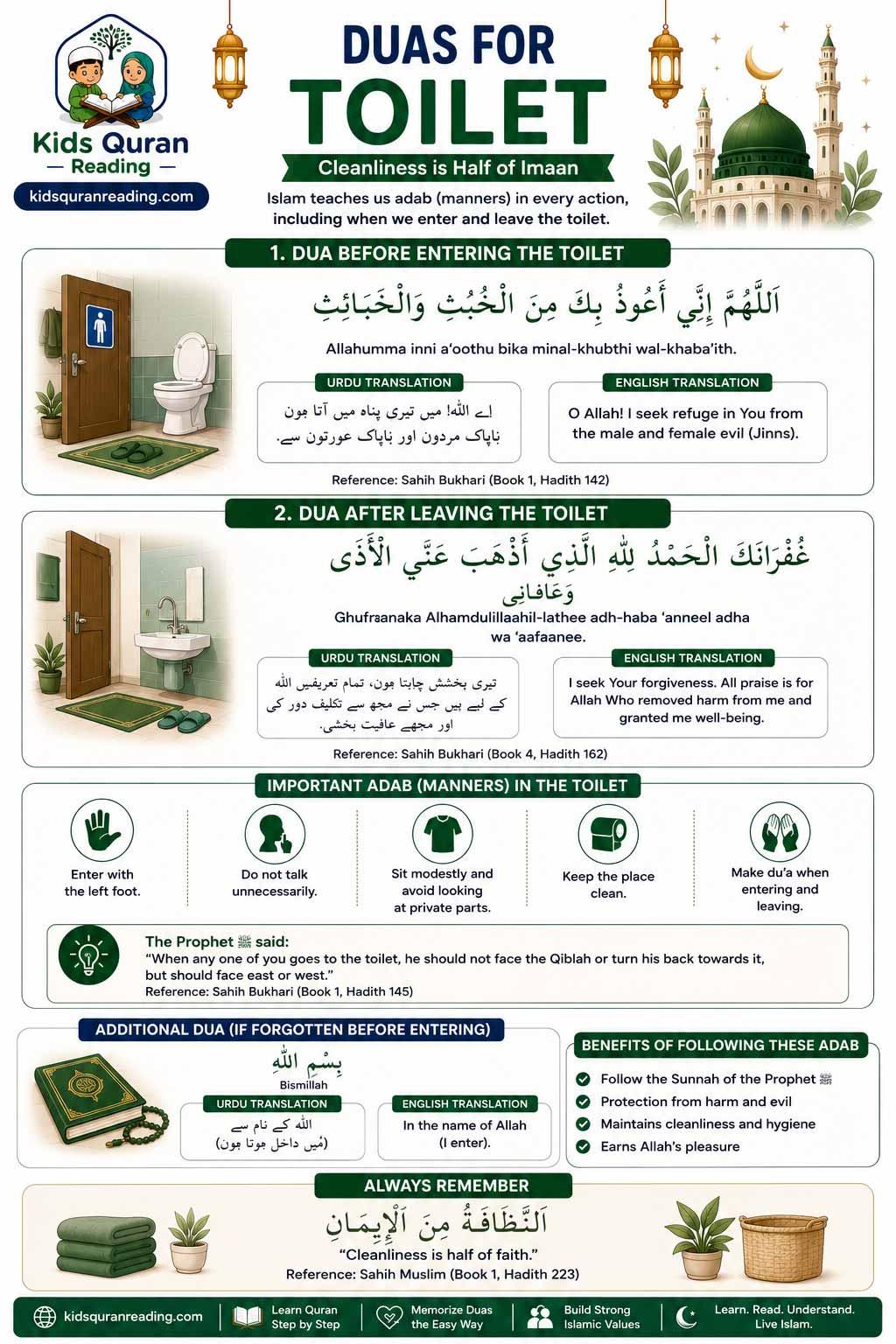
The recommended dua is:
“Allahumma inni a‘وذ بك من الخبث والخبائث”
This supplication asks Allah for protection from evil and impurities. It should be recited before entering the bathroom. It is short, easy to memorize, and highly beneficial.
English Translation of Entering Toilet Dua
The meaning of the dua is:
“O Allah, I seek refuge in You from all evil and harmful things.”
Understanding the translation increases sincerity. It helps a person feel spiritually protected. This awareness strengthens faith in daily life.
Dua After Leaving the Toilet
After leaving the bathroom, Muslims recite: “Ghufranak” This means asking Allah for forgiveness. It reflects humility and gratitude after relief. This simple dua carries deep spiritual meaning.
Benefits of Reciting Toilet Duas
Reciting these duas provides protection from unseen harm. It also keeps a person connected to Allah throughout the day. Following Sunnah brings extra rewards. These small acts build strong spiritual habits.
 |
Sunnah Etiquettes for Using the Bathroom
Enter with the left foot and leave with the right foot. Avoid facing the Qiblah while relieving yourself. Maintain cleanliness and hygiene at all times. These etiquettes ensure both physical and spiritual purity.
Hygiene and Cleanliness in Islam
Cleanliness is a major part of faith in Islam. Proper hygiene after using the toilet is essential. It helps maintain health and spiritual purity. Islam encourages both internal and external cleanliness.
Common Mistakes to Avoid
Avoid forgetting to recite the dua before entering. Do not speak unnecessarily inside the bathroom. Neglecting cleanliness goes against Islamic teachings. Always maintain proper etiquette and awareness.
Tips to Remember Bathroom Duas Daily
Place reminders near the bathroom entrance. Practice regularly until it becomes a habit. Teach children these duas early in life. Consistency helps turn small actions into acts of worship.