What is Dua for Taraweeh?
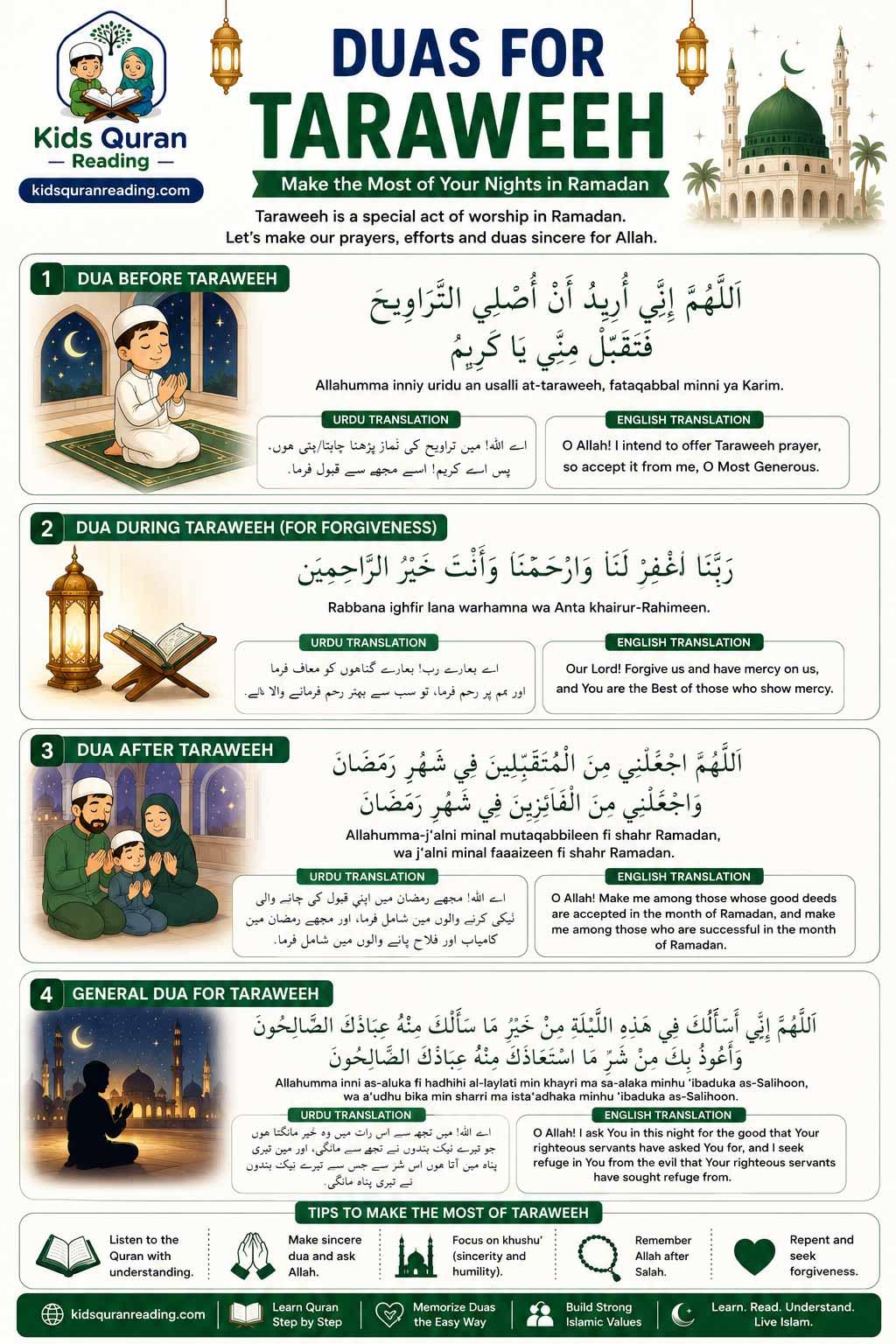
Dua for Taraweeh refers to the supplications Muslims recite during or after the special night prayers in Ramadan. These duas are a way to seek forgiveness, guidance, and blessings from Allah. Taraweeh is a time when duas are more likely to be accepted. Many Muslims also recite specific supplications between rakats.
Importance of Dua During Taraweeh
Taraweeh prayers hold immense spiritual value, and making dua during this time increases the chances of acceptance. Ramadan is a blessed month where Allah’s mercy is abundant. Engaging in dua during Taraweeh strengthens your connection with Allah. It’s a perfect time to ask for both worldly and spiritual needs.
Common Dua for Taraweeh in Arabic
One commonly recited dua is:
"Subhanal Malikil Quddus"
Muslims also recite longer supplications asking for forgiveness and mercy. These duas are often recited softly between sets of prayers. Learning them in Arabic brings deeper spiritual connection.
English Translation of Taraweeh Dua
Understanding the meaning of dua enhances sincerity and focus. For example, “Subhanal Malikil Quddus” means “Glory be to the Sovereign, the Most Holy.” Reflecting on meanings helps you connect emotionally. It transforms the prayer into a heartfelt conversation with Allah.
When to Recite Dua in Taraweeh
Dua can be recited at multiple points during Taraweeh. It is commonly recited after every 4 rakats or during breaks. You can also make personal dua in sujood (prostration). The last third of the night is especially powerful for supplication.
Benefits of Reciting Dua in Taraweeh
Reciting dua during Taraweeh brings peace and spiritual comfort. It helps cleanse sins and draws you closer to Allah. Regular supplication increases faith and patience. It also provides hope and emotional relief during difficult times.
 |
Personal Duas You Can Make
You are not limited to specific duas—personal duas are highly encouraged. You can ask for forgiveness, health, success, or guidance. Speak from your heart in any language. Allah understands all languages and intentions.
Dua for Forgiveness in Taraweeh
“Allahumma innaka ‘afuwwun tuhibbul ‘afwa fa’fu ‘anni”
This dua is especially recommended during the last 10 nights. It asks Allah to pardon sins and grant mercy. Repeating it with sincerity brings immense reward.
Tips to Make Effective Dua
Start by praising Allah and sending blessings upon Prophet Muhammad (PBUH). Be sincere and focused while making dua. Raise your hands and face the Qiblah if possible. Consistency and patience are key for acceptance.
Taraweeh Dua for Laylatul Qadr
Laylatul Qadr is the most powerful night in Ramadan. Duas made on this night are better than a thousand months. Focus on forgiveness, guidance, and Jannah. Increase your worship and sincerity during the last 10 nights.